Chapter III · Service & Learning Design
Classes as a System
I relaunched Paxton Gate’s dormant workshop program — about 46 workshops a year in insect spreading and taxidermy. A two-hour class looks simple from the student’s seat. Here is everything that made it simple.
- Learning design
- Documentation
- Program building
~46workshops a year, in insect spreading and taxidermy
5moments from sign-up to follow-up, each one designed
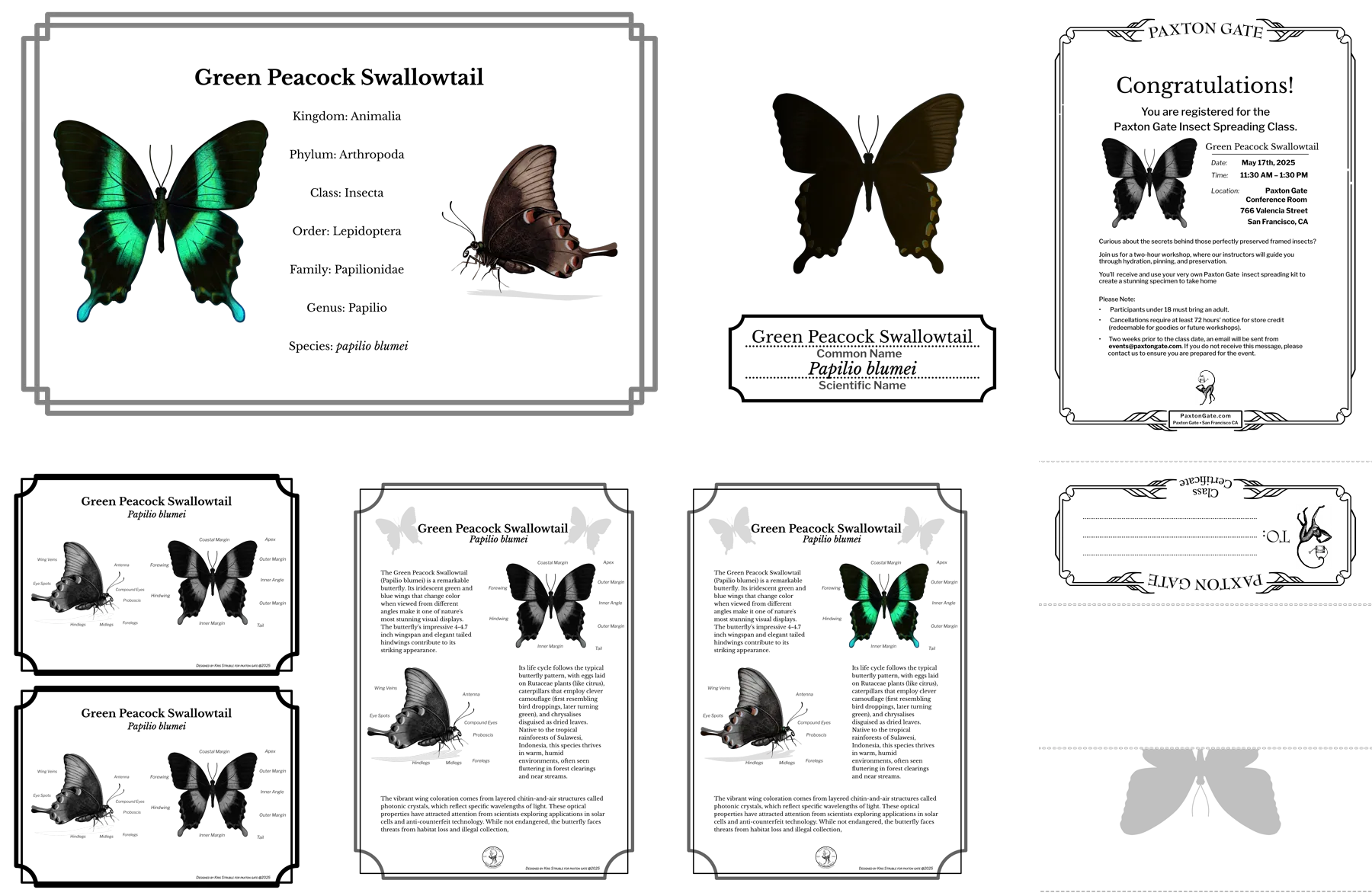
1document set per species taught
The class, from sign-up to follow-up
- RegistrationA certificate-style confirmation with the date, place and policies
- Two weeks outA prep email from me, so everyone arrives ready
- PrepFoam, vellum and grid paper cut; every material checked and stocked
- The classA written curriculum and a full document set for the species
- AfterA follow-up email to close the loop
The paperwork behind one class — sphinx moth
Written so any instructor could teach it. Press a page to read it.
Teaching the teachers
I also ran a hands-on spreading class for the store staff, so anyone on the floor could answer a customer’s question. Anything we couldn’t answer, I looked up and shared with everyone as an FAQ.