Chapter I · Product Design
The Insect Spreading Kit
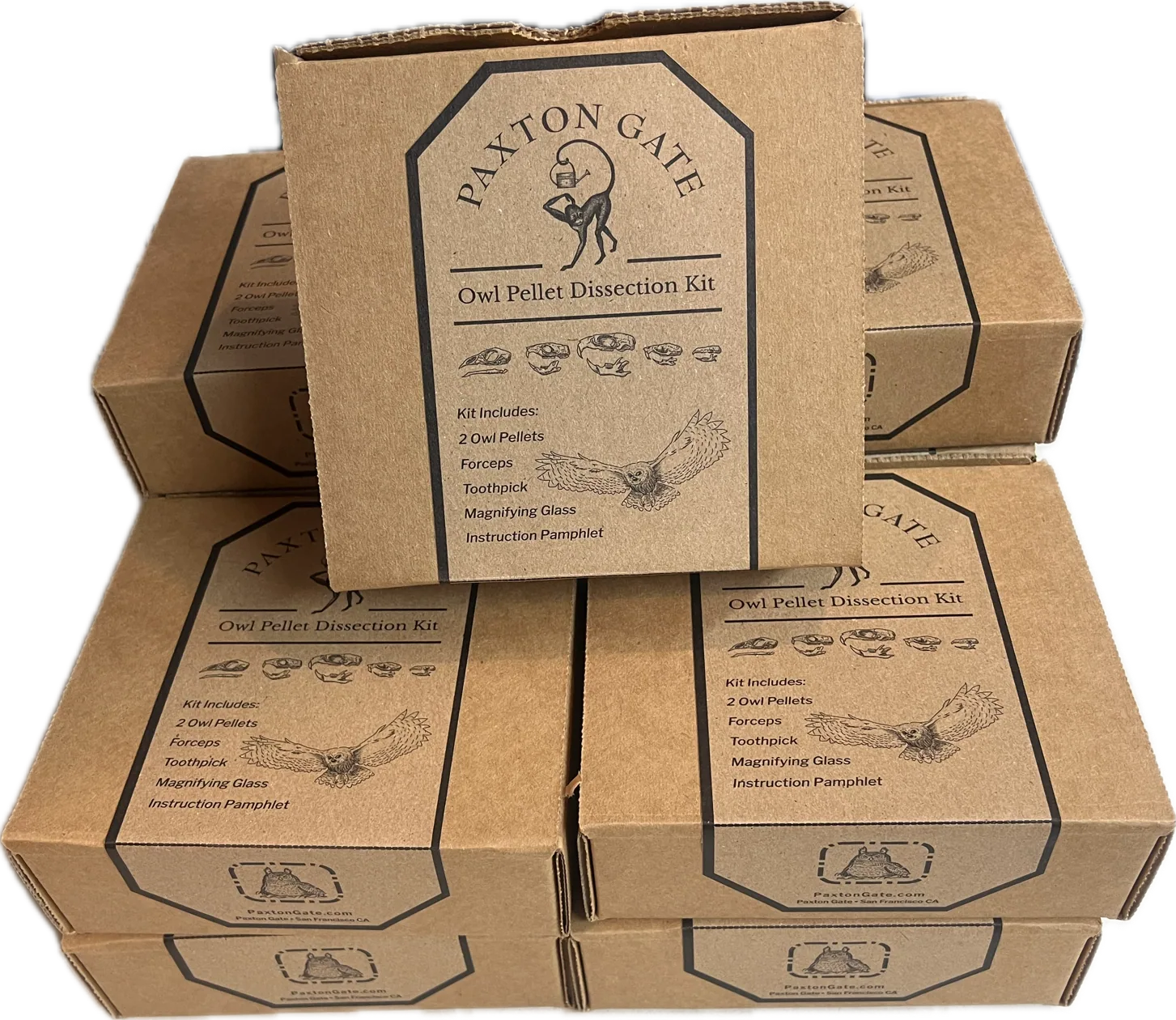
Paxton Gate’s insect-spreading class, packed into a box so people could learn it at home. I designed, costed, illustrated, and built it — then redesigned it once I saw how the first version actually lived on the shelf.
- Product reasoning
- Packaging
- Cost
A clear acrylic box
It showed off the tools beautifully but would scratch with normal handling and it was a large share of the cost of every unit.
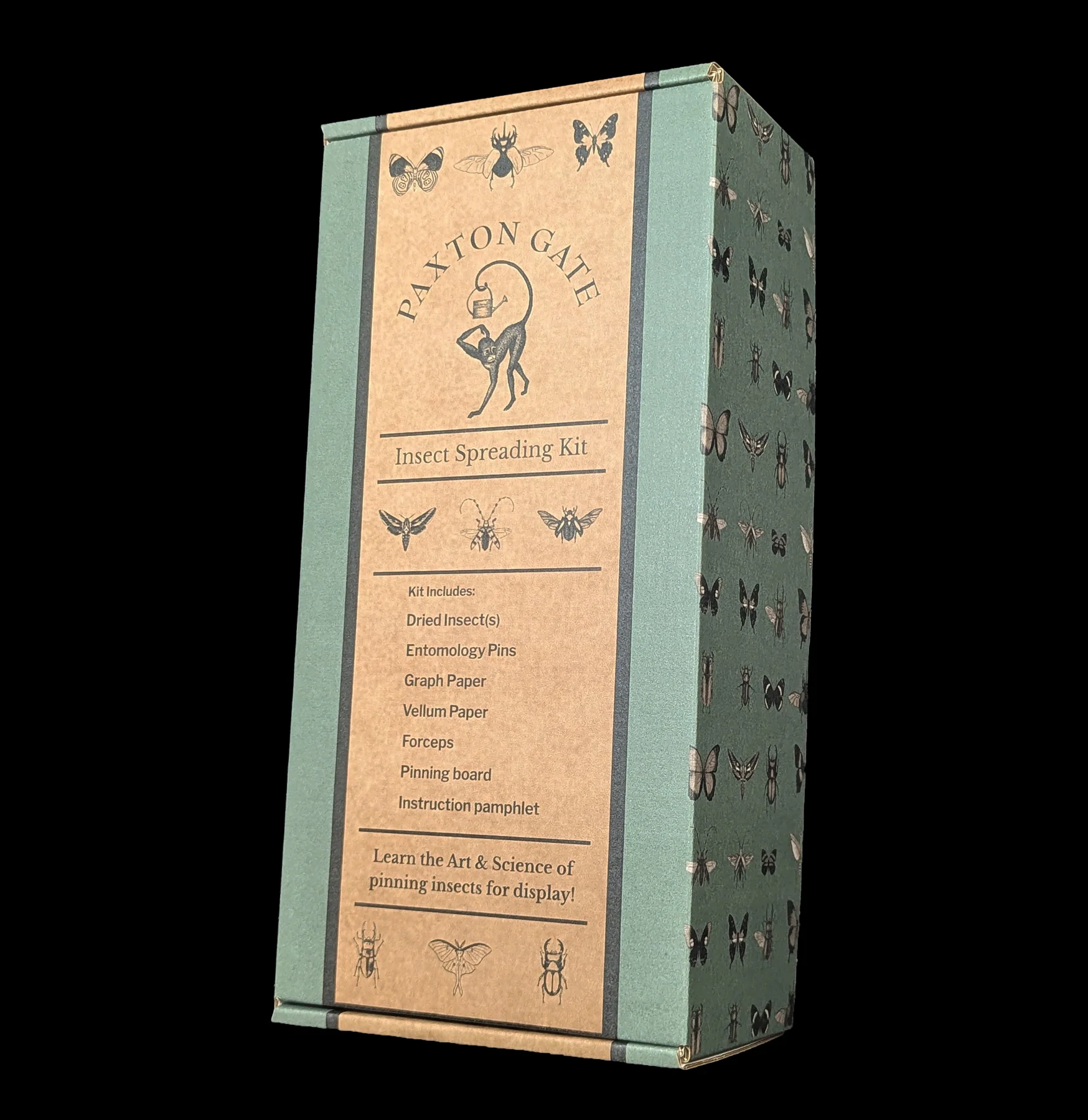
Printed packaging, and a second specimen
I replaced it with custom printed packaging that looked just as good at about half the cost, and put the savings back into the kit: a second specimen. Now every kit has a butterfly and a beetle, so a beginner practices both techniques instead of one.
Damaged packaging dropped, and the colorful box plus “two chances to learn” pulled more customers in.
Two specimens, two techniques, in every box. The value of the kit is the learning, so that wasn’t the place to save money.
The box is a pattern, not a portrait of one species. Pairings change with what suppliers have — five of them on the listing today — without reprinting a single box.
Same system, second product